
Agricultural Jet Washing
Agricultural jet washing plays a vital role in maintaining hygiene, biosecurity, and operational efficiency across farming communities in Northumberland, County Durham, Teesside, and the rural areas surrounding Newcastle and Sunderland. From livestock housing and milking parlours to grain stores and agricultural machinery, professional jet washing keeps farming operations clean, compliant, and productive throughout the demanding agricultural calendar.
Biosecurity stands as the top priority for North East farmers, and regular agricultural jet washing is the strongest line of defence. Disease outbreaks threaten not only animal welfare but also the very survival of your enterprise. Only through thorough cleaning and disinfection between livestock batches can you break disease cycles decisively. By removing manure, bedding, and contaminants from every surface, professional jet washing prepares buildings for effective disinfection and helps protect your operation from avoidable loss.
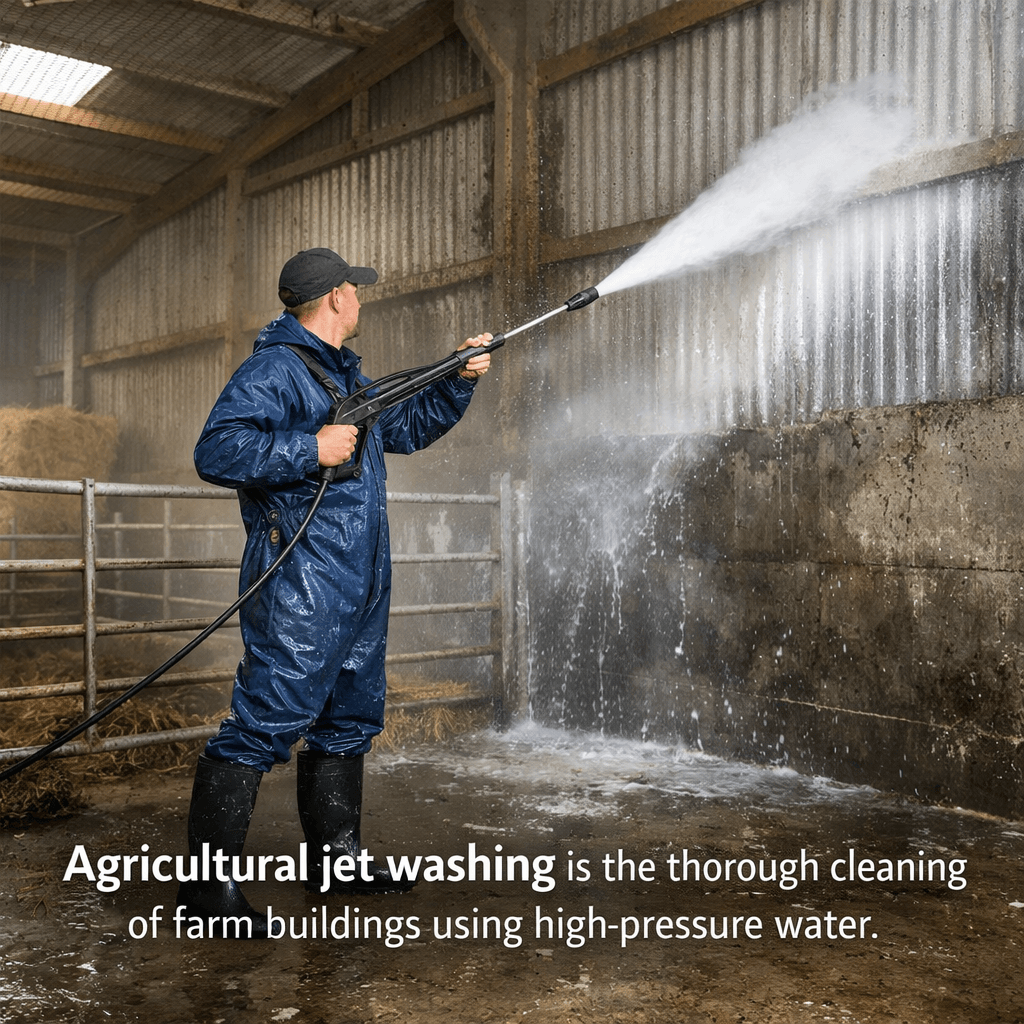
The region’s agriculture encompasses upland sheep farming, dairy operations, arable farming, and mixed enterprises. Each sector has specific jet washing needs: dairy requires meticulous parlour cleaning for hygiene regulations; poultry producers need thorough turnaround cleaning; and arable farmers benefit from equipment cleaning to prevent disease carryover.
Agricultural vehicles and machinery represent significant capital investments for North East farmers. Tractors, combine harvesters, sprayers, and implements accumulate mud, crop residue, chemical deposits, and organic matter during daily operation. Agricultural vehicles and machinery are valuable assets, and their cleanliness is key to maximising return on investment. Tractors, combine harvesters, sprayers, and implements inevitably accumulate harmful debris in daily use. Only regular jet washing efficiently removes these threats, prevents corrosion, preserves vital systems, and extends your equipment’s working life. Clean machinery allows earlier problem detection, saving you from costly breakdowns during high-stakes harvests.rds, and traditional stone structures. Jet washing removes the biological growth, chemical residue, and accumulated grime that accelerate structural degradation, helping farmers protect their building investments and avoid premature repair or replacement costs.
Compliance with agricultural regulations is increasingly demanding for North East farmers. Environmental Agency requirements, Red Tractor assurance standards, and customer audit protocols all specify minimum cleanliness standards for farm buildings, equipment, and operational areas. Professional jet washing services help farmers consistently meet these obligations, providing documented cleaning records that demonstrate compliance during inspections and audits.
Yard and hard-standing maintenance is another essential application of agricultural jet washing. Farm yards across Teesside, County Durham, and Northumberland accumulate slurry, silage effluent, fuel spills, and general agricultural waste, creating slip hazards, attracting vermin, and posing environmental pollution risks. Regular jet washing maintains clean, safe working surfaces, reduces odour problems, and prevents contaminated runoff from entering watercourses, a critical environmental compliance requirement.
Professional jet washing services accommodate the distinct demands of farming operations. Flexible scheduling addresses seasonal pressures and weather constraints. Mobile equipment reaches remote rural sites, and operators are versed in biosecurity, chemical handling, and the realities of working alongside livestock and active farms.
Proper water management during jet washing prevents pollution. Professional operators contain and dispose of contaminated wash water in accordance with regulations, protecting waterways and ensuring legal compliance.
Across Newcastle’s rural fringe, Sunderland, Teesside, Northumberland, and County Durham, professional agricultural jet washing is essential for protecting animal health, maintaining compliance, extending asset lifespan, and supporting the effective farming practices modern agriculture demands.