Aeroplane Jet Washing
Aeroplane jet washing is a highly specialised service that maintains aircraft cleanliness, aerodynamic performance, and operational safety standards. With Newcastle International Airport serving as the North East’s primary aviation hub, and numerous private airfields and military installations across Northumberland, Durham, and the wider region, professional aircraft cleaning services play an important role in supporting the region’s aviation sector.
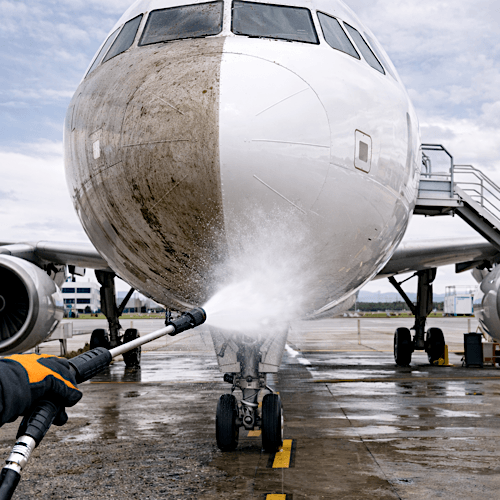
The techniques employed in aeroplane jet washing differ significantly from those used in conventional pressure washing. Aircraft surfaces feature lightweight aluminium alloys, composite materials, specialised coatings, and sensitive sensor equipment that cannot tolerate aggressive high-pressure cleaning. Professional aircraft washing services operating around Newcastle Airport and across the North East use carefully calibrated low-pressure washing systems combined with aviation-approved cleaning agents that dissolve contaminants without damaging aircraft surfaces, paintwork, or critical flight systems.
For airlines operating from Newcastle International Airport, aircraft appearance directly impacts passenger confidence and brand perception. Passengers boarding a visibly clean aircraft feel reassured about the airline’s attention to maintenance and safety standards. Regular aeroplane jet washing maintains the bright, clean livery that supports airline marketing and customer satisfaction. Charter operators, private aircraft owners, and flying clubs across Northumberland and the North East similarly benefit from professional cleaning that keeps their aircraft looking impressive.
Military aviation installations in the North East, including RAF bases and Ministry of Defence facilities across Northumberland and Durham, require aircraft cleaning services that meet defence-standard specifications. Military aircraft accumulate operational contamination, including exhaust deposits, weapon residue, and environmental grime, during training and deployment. Professional cleaning supports maintenance programmes, preserves protective coatings, and maintains the operational readiness that military aviation demands.
The growing general aviation sector across the North East includes private pilots, flying schools, and aircraft maintenance organisations based at regional airfields throughout Northumberland, Teesside, and Durham. These operators require accessible, affordable aircraft jet-washing services to maintain their aircraft between annual maintenance inspections. Regular cleaning prevents corrosion, particularly important for aircraft based near the North East coast, where salt-laden air accelerates metal deterioration.
Helicopter operations across the North East, including air ambulance services, offshore support flights serving North Sea operations from Teesside and Newcastle, and agricultural aviation, present unique cleaning challenges. Helicopter rotor systems, transmission housings, and undercarriage configurations require specialist knowledge and careful cleaning techniques. Professional operators understand these requirements and adapt their approach accordingly.
Environmental compliance during aeroplane jet washing requires rigorous wastewater management. Aircraft cleaning generates wash water containing petroleum-based residues, heavy metals from brake dust, and chemical cleaning agents, all of which must be captured, treated, and disposed of in compliance with environmental regulations. Professional services operating at North East aviation facilities implement comprehensive containment and treatment systems that prevent airfield drainage contamination.
Seasonal factors significantly impact aircraft cleaning requirements in the North East. Winter operations involve heavy exposure to de-icing chemicals, salt spray from treated runways, and increased atmospheric moisture, all of which accelerate corrosion. Summer brings insect contamination, pollen deposits, and UV degradation of surface coatings. Year-round professional cleaning programmes address these seasonal challenges and protect aircraft assets throughout the changing North East climate.